Written by Lauren Lind
College students may be at an advantage when it comes to diversifying their resume. As entry-level candidates, students have the opportunity to buff up their resume and add to it in order to set themselves apart from their competition. Summer is the perfect time to participate in a variety of things that can add value to your resume. Depending on the professional experiences you’ve had, you may need to shorten the length of your resume, where others may need to add to it.
If you need to add to your resume, take a look at the tips below:
Volunteer. This is a no brainer way to add value to your resume. Make it worth your while by volunteering for a cause that you genuinely care about. You’ll meet some great people and feel good about what you’re doing.
Start an independent project that is relevant and appropriate for the area you want to work in. For example, my roommate is interested in business development and is researching what it would take to open a small start-up this summer that delivers toiletries to people. She will be writing a paper and developing a presentation to detail her project.
Expand your skills. Sign up for a foreign language or a coding course. Get involved with things that interest you and that will help you develop as a professional.
Add important details as possible to your job descriptions and accomplishments. You want to turn what you might consider to be mundane tasks into prominent, important, tasks. It all about the wording. Hit on the keywords in the job description and take out any superfluous words or phrases. Stay away from clichés as well.
Start a blog or vlog that will be relevant to what you want to do. The world wide web
is a wonderful tool to build up your online presence. This is your chance to really make an impression and impact using your creativity.
Travel. Summer is a perfect time to explore. You might even be able to tie in your volunteer work with traveling around the world. Either way you will be learning how to work with different cultures and develop valuable skill sets.
These are just a few ways to help you buff up your resume. Hopefully you can fit some of these tips into your summer schedule and feel that you have given yourself an advantage when entering the workforce.
Hat tip: Cristina at the Execu|Search Group
Showing posts with label CU Career Services. Show all posts
Wednesday, June 18, 2014
Wednesday, May 28, 2014
How Your Credit Score Can Affect Getting a Job
Written by Lauren Lind
Many people aren’t aware that your credit score can affect you in your job search. Depending on the State Law, an employer can in fact check your credit score. As of July 2013, according to the Colorado Department of Labor & Employment, Colorado is one of the states that strictly limit the circumstances in which employers may use credit reports in making employment decisions. An employer may require applicants and employees to authorize the employer to view their credit reports if the employer is a bank or financial institution, or is required by state or federal law to use credit history for employment purposes. The limited circumstances include a situation where the job involves a contract with the federal departments of defense, intelligence, national security, or space.
Employers may also use credit information if the job is an executive, managerial, or officer position (or professional administrative staff to such positions), and involves at least one of these duties:
• Setting the direction or control of a unit, agency, division, or the entire business
fiduciary responsibility to the employer
• Access to the financial information of customers, employees, or the employer (beyond the information routinely provided in retail transactions), or
• The authority to enter into contracts, collect debts, or issue payments
If you fall under these exceptions or live in a state where employers may use your credit score freely in the hiring process, then you need to be aware of the following:
• Employers might consider you a liability. It is very possible that the employer will correlate your struggles with your credit and home situations with projected ability to be present at work.
• This could be the deal-breaker between you and your competition. If your competitor’s credit score is good and your score is in the dumps then you automatically knock yourself out of the running.
• Bad credit sends you on a downward spiral. It gets exhausting trying to keep up with previous bills after being unemployed. It becomes harder to gain employment, even though you may be qualified in every other area.
• You can say goodbye to a job in finance until your credit is in the clear. The reasoning for this is fairly simple, if you cannot handle your own finances, what would make the employer believe you could handle anyone else’s finances?
Luckily, since we live in Colorado, your credit score cannot legally be used against you unless you fall under the specifications listed above. Employers want to be able to trust you and believe that if you have a long-term good credit standing, it will relate to your reliability.
Hat tip: Colorado Department of Labor & Employment
Many people aren’t aware that your credit score can affect you in your job search. Depending on the State Law, an employer can in fact check your credit score. As of July 2013, according to the Colorado Department of Labor & Employment, Colorado is one of the states that strictly limit the circumstances in which employers may use credit reports in making employment decisions. An employer may require applicants and employees to authorize the employer to view their credit reports if the employer is a bank or financial institution, or is required by state or federal law to use credit history for employment purposes. The limited circumstances include a situation where the job involves a contract with the federal departments of defense, intelligence, national security, or space.
Employers may also use credit information if the job is an executive, managerial, or officer position (or professional administrative staff to such positions), and involves at least one of these duties:
• Setting the direction or control of a unit, agency, division, or the entire business
fiduciary responsibility to the employer
• Access to the financial information of customers, employees, or the employer (beyond the information routinely provided in retail transactions), or
• The authority to enter into contracts, collect debts, or issue payments
If you fall under these exceptions or live in a state where employers may use your credit score freely in the hiring process, then you need to be aware of the following:
• Employers might consider you a liability. It is very possible that the employer will correlate your struggles with your credit and home situations with projected ability to be present at work.
• This could be the deal-breaker between you and your competition. If your competitor’s credit score is good and your score is in the dumps then you automatically knock yourself out of the running.
• Bad credit sends you on a downward spiral. It gets exhausting trying to keep up with previous bills after being unemployed. It becomes harder to gain employment, even though you may be qualified in every other area.
• You can say goodbye to a job in finance until your credit is in the clear. The reasoning for this is fairly simple, if you cannot handle your own finances, what would make the employer believe you could handle anyone else’s finances?
Luckily, since we live in Colorado, your credit score cannot legally be used against you unless you fall under the specifications listed above. Employers want to be able to trust you and believe that if you have a long-term good credit standing, it will relate to your reliability.
Hat tip: Colorado Department of Labor & Employment
Labels:
bad credit,
Boulder,
credit score,
CU,
CU Boulder,
CU Career Services,
good credit,
Job search
Thursday, May 22, 2014
Are you Difficult to Work With?
-->
Written by Lauren Lind
Everyone has that one co-worker that just irks him or her.
Whether it’s their constant nagging or over-sharing, you try to dodge their
presence at all costs. You, on the other hand of course, are the perfect
co-worker. You are always pleasant, always meeting deadlines, easy to get along
with, and are never annoying...right? Unfortunately, we all tend to think that
the issue could not possibly be ourselves, myself included. Have you ever
considered that YOU may be the co-worker that is snickered about or is draining
energy from your office?
I found myself the other day going on and on about how much
I hated the Bachelor Juan Pablo and didn’t realize I was using my co-worker as my
sounding board. I never considered that I could be draining my poor co-worker.
After some self-reflection, I have realized that I have things that can be
worked on as a co-worker so that I am a more enjoyable person to work with. We
all have little things that can be improved upon. Simply put, we are all human.
I want to be the co-worker that I expect my fellow colleagues to be.
Valued qualities in a co-worker and employee are:
1.
Empathy
Being empathetic is important because it shows that you care about more than yourself. Have you ever had a co-worker that could never empathize? It is not enjoyable to work with him or her because they show little concern for anyone but themselves.
2.
Autonomy
Have you ever had a colleague that needed
hand holding through every project? Being able to work on your own and taking
the initiative makes working together easier for those involved.
3.
Interpersonal
Skills
There are some boundaries that should not
be crossed in the office. Showing interpersonal skills and being able to “play
well with others in the corporate sandbox” can get you far. Learning how to
manage conflict and not talk negatively about your less favorable co-workers
can get make you a person that people want to work with.
4.
Flexibility
& adaptability
Being the co-worker that has to have their
way no matter what gets old. Really listening to other’s ideas and trying to
compromise can go a long way. Also showing the ability to rearrange meetings
and making time for the people you work with to talk face-to-face can help
combat aggressive emails that can lead to conflicts.
5.
Positivity
Debbie Downer and Negative Nancy are just
plain energy suckers. Remaining upbeat and positive about the on-goings within
your organization or company will help the overall morale.
6. Self-awareness
It all boils down to being
self-aware. As I mentioned before, we all tend to think that we are never the
‘problem co-worker,’ but are you being honest with yourself? Doing a self-evaluation
can help the office be a better place in general. Be the co-worker that you
want everyone else to be.
You may or may not suck to work with. Either way, it is
always good to look internally and see how you can make your workplace better.
The less ‘suckiness’ in the world, the better right?
Hat tip: Arnie
Fertig
Labels:
co-workers,
CU Boulder,
cu buffs,
CU Career Services,
difficult
Monday, May 12, 2014
Volunteering Your Way to New Opportunities: Finding Happiness in Helping Others
Written by Lauren Lind
It’s about that time for swim suits, flip flops, ice cream,
outdoor concerts, and many other fun summer activities! If you do not have a
job lined up yet, or are perhaps interning part-time, consider using some of your
time to give back to the community by volunteering.
Volunteering has been proven to reduce stress, improve
health, and promote personal growth and self-esteem. It allows you the chance to
test out a career. While making a positive difference in the community or
wherever you choose to volunteer, you can also network your way to finding
possible career options.
Here are some volunteer resources for you to use this
summer:
Not only can you bring happiness to other people’s lives,
but you can also discover many opportunities that you might not have come
across otherwise. Volunteering brings a variety of people together and making
connections in these situations may just lead you to finding your future job.
Monday, May 5, 2014
Life After Graduation- Dealing with the Stress of Not Yet Having a Job
Written by Lauren Lind
Life is about to change drastically if you are graduating
this week. You are about to enter the real
world, where nine to fives are the norm and mid-day naps are no longer
acceptable. The real world can seem
daunting and you might feel like you need to have your whole life figured out. The
stress of not having a job or a plan figured out after graduating can be
overwhelming to say the least, but let’s not forget that you have just spent
the last four years working hard to earn your bachelors degree. You will now
join 30% of the US population by having your diploma. That is a huge
accomplishment! Be proud, take the time to celebrate, and realize that the
world is open to you.
Here are some tips to
help you make it through hard post-graduation times:
• Take a deep breath.
No really…do it. Everything is going to be okay. You, like many other recent
college grads, also do not have jobs lined up yet. What will ultimately set you apart is your resilience
and determination when it comes to finding a job.
• Make a bucket list.
You aren’t tied down to a job yet, which can be a beautiful thing for the time
being. This is the time to figure out what it is you want to do and do it. You
can try on different career hats by interning after college or even
volunteering for a cause close to your heart.
• Schedule an appointment
with a career counselor at Career Services. This can be a really great
starting place when it comes to figuring out what your options are and you can
begin to come up with a plan. Career
Services will be free to you as an alumnus for the first two appointments (and
$30 each appointment thereafter), so take full advantage of the wonderful services
we have to offer.
• Tailor your resume
and cover letter. Ditch the generic resume and cover letter and set
yourself apart from your competition with a tailored resume and cover. For the best results, tailor both of these
documents to each job you are applying to and hit on the keywords listed in the
job description.
• Use your online job
searching tools. You can start
looking on Career
Buffs, Indeed, Glassdoor, LinkedIn and other job
searching sites for opportunities. Set a goal for yourself of applying to at
least a certain amount per week and follow up with those you have applied to.
• Network. Find
networking events in your area and have your parents and family friends spread
the word that you are looking for a job. You never know who will
• Make a spreadsheet
for jobs applied to and connections you have made. A great way to stay
organized in your job search is to keep track of the jobs you’ve applied. Make a spreadsheet with the jobs you have
applied to, the dates and who you have followed up with on specific dates. You
can also track people emailed or connections that you need to follow up with
from networking.
• Find your stress
outlet. It could be running, painting, making music, journaling, but whatever it is, make sure you set time
aside in your day to give your mind a rest from job searching.
I know these times are exciting and terrifying all at the
same time if you are graduating this week. Be proud of yourself and realize
that with some hard work and determination, you can and will find a job. Don’t
forget to enjoy life in the process. Call Career Services to schedule an
appointment at 303.492.6541 or make an appointment
online if you’ve graduated less than a year ago.
Wednesday, April 30, 2014
How to Prepare for Third Round Interviews
Written by Lauren Lind You’ve made it past the first screening and second phone interview, congrats! Now it’s time to really hone your interviewing skills and show why you are the strongest candidate for the job.
Here are some tips for your third round interview:
• Research the company you are interviewing for inside and out. You should have already done this by now, but this is the chance to get a grasp on anything you didn’t research before.
• Make sure you know the leadership team and be able to refer to them.
• Be able to slip some knowledge of current going ons within the company and be able to describe all of the companies' products.
• Look up the people you are interviewing with on LinkedIn and find commonalities between you and the interviewers. Know the job titles of each person you are interviewing with and come up with well thought out questions for each person. Always have questions; never respond with “no” if they ask if you have any questions for them. Asking thoughtful questions shows you’ve looked into the position and you’re interested in what the company does, what the culture is like and how you’d fit in at the organization.
• Be sure to look up specific questions that are typically asked for the type of position you are interviewing for. Then use the STAR method and come up with specific examples from your previous experiences that relate to the position you are interviewing for to support your answer. Have at least four STAR responses prepared ahead of time.
• Practice, practice, practice. Before the big day, make sure to get in at least three mock interviews so that you can get comfortable with talking out loud and get all the jitter bugs out.
Dress the part. Some companies will want you to dress in a suit and others might view you as uptight if you dress in a suit. Know what the company culture is like before showing up.
• Arrive 10-15 minutes ahead of time. If you are early you are on time, and if you are on time you are late.
• Exude confidence. This is extremely important for a third round interview. By showing that you are prepared and confident in your skill set you are giving the interview incentive to hire you. Exemplifying low confidence will automatically put you out of the running.
Refer to what you’ve done with “I” statements instead of “we.” The interviewer wants to know how YOU can best assist their team, not the company that you currently work for.
• Fake it until you make it. If you get a curveball question thrown at you, take a breath and reply with “that is a really great question,” then respond to the best of your ability.
Have your thank you cards with you and fill them out as soon as possible after the interview. Time is of the essence.
• When writing the thank you cards, be sure to mention at least one specific thing that you discussed with the interviewer. If you are talking with four people this can get confusing, so make notes about each interviewer after the interview.
These are some things that have helped me in the past with third round interviews. In summary, you should research, practice, ask questions, and most importantly be confident in your abilities. If you find you have some questions about how to prepare for your interviews, whether it’s the first or the last round, come in to see a career counselor. Career Services is here to guide you through this process and offers mock interviews, video interviews through Interview Stream (available through Career Buffs) and interview prep.
Hat tip: Ro Medina
Monday, April 28, 2014
Shy? Hate Networking? Here's a New Approach That Won't Make You Want to Hide in a Corner
When you’re in the market for a new job, what’s the same piece of advice you hear over and over?
NETWORK! YOU NEED TO NETWORK!
And there’s good reason why people give you that advice. Experts estimate that anywhere from 60 to 80 percent of people find jobs through personal contacts.
But what if you don’t have a network with which to, well, network? Let’s start with the excuses reasons why you might not have a network to tap:
- You just graduated from college.
- You just moved to a new city and don’t know anyone yet.
- You’re changing industries.
- You don’t want the people you work with now to know you’re looking.
- You’re just not good at networking.
If you’re making any of these excuses, it’s time to get over it!
Take a new approach to networking
You’re a human being, right? You know other human beings,
right? You have parents, siblings, aunts, uncles, cousins, grandparents,
old friends, new friends, current neighbors, past neighbors, former
classmates, former teachers or professors, maybe a community or church
group you belong to, the guys you play basketball (or softball or flag
football) with, the girls in your book club, the people you chat with at
the health club… And on and on.
And don’t even get me started on your social networks.
The average American knows about 600 people.
And if those 600 people know another 600 each, that’s 360,000 people!
If that’s not a big enough network for you to work with, you have too
much time on your hands.
But sometimes people say, “Those people don’t know anyone in my industry. They can’t help me find a job.” The truth is, you have no idea who the people you know also know. (Click here to tweet this thought.) Or who they know who may also know someone else who could help you. That’s why “Six Degrees of Kevin Bacon” is such a fun game to play. But I digress.
In networking, the whole point is to cast your net broadly to see what leads, contacts and ideas you can reel in.
How to tap your “non-network” network
Here’s the real secret behind networking: The people in your network won’t find you a job. But what they can do is connect you to people who know other people. And those people may know just that person who has a job you’d be perfect for.
1. Make the biggest, broadest list of everybody you know
Your only two criteria for adding anyone to this list are:
- The person is breathing.
- The person will recognize either your name or the name of the person who connected you to them. (“We both lived on 3 Allen sophomore year,” or “I’m a friend of your sister Penelope.”)
2. Prioritize your list as follows:
- Extroverts who know a lot of people. (They’ll be “above-average” on how many people they can connect you to.)
- People who “owe you one” because you’ve done them a favor or lent them assistance in the past. Now’s the time to collect on your debt.
- People who seem like they probably like helping people (or at least, would like to help you).
Believe it or not, it doesn’t matter whether they have any
connection to the industry or job you’re interested in. If they do,
that’s gravy. But it shouldn’t be your only reason for contacting
someone in your network. Keep in mind you don’t know who else they know.
Remember… 600 people.
3. Know what you need from them and how to ask for it
Now that you have your list categorized, it’s time to start
reaching out. Here’s how the basic conversation should go: Start with,
“I’m interested in (blank) job or industry.” Next, ask one or all of the
following questions:
- Do you know anything about that industry or this type of position?
- Do you know anyone who works in it or a related one?
- Can you think of anyone you know who I should talk to? Would you connect me with them?
Some people say this approach to networking is like searching for a needle in a haystack. And sometimes it is. If you’ve got a big, robust professional network you’ve been building for years, then you don’t need this approach.
But if you don’t, you have a choice. You can either spend time searching for jobs online and sending your resume again and again to computers that won’t read it. Or you can find a few real, breathing human beings you already know — or someone who knows them — who can give you real info, advice and ultimately access to that perfect job.
So stop saying you don’t have a network. You do. Everybody has one. You just have to use it.
Sue Matson is partner with Executive Coaching firm rd&partners in Chicago, IL. Her clients enjoy her practical, straightforward advice and her ability to help them focus on what’s most important to their career success. Read more articles like this on her blog.
Brazen powers real-time, online events for leading organizations around the world. Our lifestyle and career blog, Brazen Life, offers fun and edgy ideas for ambitious professionals navigating the changing world of work.
Attention CU students/alumni and Boulder professionals, be sure to signup for expert networking guru, Nancy Chin-Wagner's, PowerConnections Network Mixer! It will be held at Cantina Laredo Thursday May 1st from 5:30-7:30pm. The cost is $15 dollars through online registration and $20 dollars at the door (includesfood). This is the PERFECT opportunity to start your networking process and use the tips form the article listed above. I hope to see you there!
Hat tip: Lauren Lind
Wednesday, April 23, 2014
5 Things You Can Do to Prepare for a Successful Summer
Written by Lauren Lind
Summer break is fast
approaching and perhaps you don’t have an internship or job lined up yet. If
this is true for you, don’t worry! Here are five things you can do to prepare
to have a productive summer and further your professional development.
1. Continue applying for jobs and internships. Don’t
give up hope if you have not found your ideal position for the summer. Those
who give up will be sure to not have anything lined up compared to those who
are resilient.
2. Consider volunteering locally or abroad. Volunteer
work is not only good for community at large, but it can also help you grow and
learn things that you might not learn in an office setting. Not to mention,
volunteer work is a great booster for your resume and can help put your life in
perspective when things seem bleak.
3. List out places you want to travel. No better time to
travel for sun than summer. Once you have graduated, you will not have the
luxuries of summer breaks so take advantage and see the world and even try to
squeeze in a few informational interviews in along the way. This is a great
opportunity to meet people that you might normally never cross paths with.
4. Think about taking summer classes. Taking a class or
two in the summer can lighten the load for future semesters and you can better
focus on specific classes.
5. Find your creative outlet. Whether that is painting,
reading, writing, singing, building websites, etc. do activities that keep your
brain sharp and make you happy.
If you are still looking for
an internship or job be sure to check out Career Buffs. There are tons of companies looking
for great summer applicants! It’s definitely not too late.
If you need additional
support, Career Services will be open all summer long to help you. From May 12
through August 22, our summer hours will be 7:30am-4:30pm. Call us to make an
appointment at 303.492.6541 or make one online if you are
an undergraduate student or an alumnus who has graduated less than a year ago.
Moving Across Country for a Job: How to Budget for Living on Your Own in a New City
-->
A few weeks ago I sat down with my dad to talk about moving to
New York City after graduation. I was overwhelmed and nervous at first because
I knew that he was not going to fund my move to New York. Being a broke college
student, with the exception of a little in savings, I didn’t know how to start
planning the move to one of the most expensive cities in the country. After
laying everything out on paper, I discovered exactly how much I would need to
earn per month to survive and I feel more comfortable knowing the salary
necessary for living. Here is the step-by-step process that I went through to
figure out my new budget for a new city and hopefully this will be of
assistance to you too.
•
Start your monthly budget by filling in this template. You may not need to fill out every
area in the template depending on your individual needs. You may also need to
add another category or two. This is just a starting point, so feel free to
customize to your needs.
•
When
filling out the income taxes withheld, do some research online to find the
correct numbers for your estimated tax bracket. Also be sure to look up or ask
someone about any other specific taxes that the city you are moving to has. For
example, New York has a 4% luxury tax.
•
Next, add up all withheld tax percentages to see
how much of your income will go to taxes so you can adjust your spending
accordingly. When I added up everything, about 38% of my income will be
withheld and this does not include any tax refunds.
• Rent can be tricky if you are moving to a new city by yourself.
Luckily, I have friends who are moving to NYC as well and together, we
researched thoroughly to find the best place for rent in a safe location. Decide
what you are willing to sacrifice when it comes to rent. I will have a 35-minute
commute to work everyday, but I will be saving $300 a month in rent by living
further away in a larger space. For me, it’s definitely worth it.
• If you are moving by yourself, research sites that pair people
together and decide what you are looking for in an
apartment and a roommate. If you know someone in the city that you’re moving
to, ask him or her for recommendations on safe areas of town.
•
For transportation costs, add up the mileage and
calculate your estimated gasoline costs to and from work. Personally, I will
not need a vehicle and will be taking the subway, so I looked up the price of
monthly metro cards and also budgeted in some money for cabs.
• Decide what items are needs versus wants. You might have to
sacrifice things that are not necessities in order to fit your budget, such as
Starbucks every morning or spending money eating out. Living beyond your means
is a surefire way to get yourself in financial trouble.
The hardest part about making a budget is estimating costs,
because more times than not, people don’t know exactly what they intend on
spending. With that said, it is better to overestimate than underestimate.
Knowing how much you will need to make in order to meet your monthly needs
financially will make moving to a new city seem more manageable. You will know
whether or not you will need to get another job to cover costs. I hope these
tips will help prevent you from being blindsided by the costs of supporting
yourself in a new city. Good luck to you!
Hat tip: About.com
Monday, April 14, 2014
5 Things to Do to Prepare for The JIT Fair
Are you looking for an internship or job and are starting to
freak out a little since summer is right around the corner? Have no fear....the
Just In Time Fair is here! Okay that was cheesy, but seriously if you are in
need of an internship or job come to the JIT Fair this Thursday. The fair is in
the UMC from 9:00am-3:00pm and ALL
employers attending are hiring.
Here are 5 things to do show up prepared for this fair:
1. Look
at the list of employers attending before hand and decide which companies you
want to speak with. Click here to see who will be attending the fair and
their job categories.
2. Research the companies attending and show up with well thought out questions for the
recruiters. It will show that you are serious about working for their company
and have done your homework.
3. Step
up your professional wardrobe. We have received feedback from employers that
students dress too casual at career fairs. Always err on the side of
overdressing than underdressing. You’ll make a much better impression this way.
4. Make
sure your resume is up to date. Bring copies with you and be able to discuss
your previous work experience in detail. Career Services has drop-ins this week
from 1:30-4:00pm where you can get a quick 15-minute review of your resume. Come
by our office in C4C, N352.
5. Be
open to exploring all your options. There are many opportunities in industries
that you might not have considered, so be open-minded.
Being prepared for the Just In Time Fair will set you apart from
competitors. If you really want a job or internship then show up with
confidence ready to make a good impression! Let us know how the career fair
went for you by tweeting @CUCareerServ or posting on our CU Career Services
Facebook wall. Best of luck in your job and internship search!
Wednesday, April 9, 2014
The Power of Networking: Utilizing Your Connections to Make Your Dreams Come True
-->
-->Written by Lauren Lind
At a Bolder
Young Professionals event, a networking group in Boulder, I met networking
guru Nancy-Chin Wagner. I did not
know who she was before being introduced to her, but soon found not only is she
one of the coolest ladies around, but she grew up in the Bronx and worked in
New York for many years. I explained my goal to her and she whipped out her
phone and gave me the phone number of a former CU alumnus who moved to NYC after
graduation four years ago. I called the alumna and we scheduled a time to meet
while I was in NYC. Once I was there, she gave me many tips regarding apartment
hunting and introduced me to another CU alumnus. He has been so helpful with
job searching and connecting me with people who are looking to hire in the city.
This past November I decided that I wanted to move to New York
City after I graduate in May. At that point in time I had no plans or ideas of
how I was going to make that dream come true. A month later, I found out that
the CU
Advertising Collective was going to New York over spring break for their
annual trip. I took that as a sign that my dream of moving to New York was, in
fact, possible!
I began the networking process by talking to my advertising
professor who ran a very large advertising agency in NYC before she came to
teach at CU. I respect this professor a lot and she was very supportive of my
aspirations. She told me, “Picking up and moving to New York was the best
decision I ever made.” She then sent a message via LinkedIn to her former
students who are living and working in NYC asking them if they would be willing
to meet with me just to give me some insights and advice.
I was pleasantly surprised at the amount of people who responded
and were willing to meet with me! From there, I had 14 more contacts in New
York than I had before. I met with these amazing people while I was In New York
and had the opportunity to tour many offices including Twitter and Foursquare,
and received tons of useful advice regarding job searching, interviewing, my
resume, and moving to the city. I was in awe of how helpful and wonderful
people were to me.
At a Bolder
Young Professionals event, a networking group in Boulder, I met networking
guru Nancy-Chin Wagner. I did not
know who she was before being introduced to her, but soon found not only is she
one of the coolest ladies around, but she grew up in the Bronx and worked in
New York for many years. I explained my goal to her and she whipped out her
phone and gave me the phone number of a former CU alumnus who moved to NYC after
graduation four years ago. I called the alumna and we scheduled a time to meet
while I was in NYC. Once I was there, she gave me many tips regarding apartment
hunting and introduced me to another CU alumnus. He has been so helpful with
job searching and connecting me with people who are looking to hire in the city.
Nancy also put me into contact with her niece who lives in
Chinatown. When I was there she showed me where I could get authentic Chinese
food (which was delicious!) and she also sent me some media-related job
openings. It amazes me that I met all these people just by simply approaching one
person at a networking event.
Another event that greatly helped my networking process was
Career Services Executives Tell All Panel
in February. I listened to
executive, Cathie
Black’s, story of graduating college and moving to NYC with friends. I felt
inspired to see someone who started off just like me and has now accomplished
so much. Cathie is the past Chairman/President of Hearst Publishing, an author,
past President of USA Today, a former
NYC schools chancellor, and many more accomplishments. I approached her after
the panel and although I felt a bit intimidated, I asked for her contact
information and told her my goals and that I would be in New York over spring break.
She gave me her contact info agreed to meet with me while I was in NYC.
Not only was she willing to meet with me, but she also was
willing to help me connect with people in New York! Cathie introduced me to her
friend who is the founder of a fantastic PR firm and I was lucky to be able to
discuss their internship program! I was also awestruck by the fact that such an
accomplished businesswoman was willing to help me find job and internship
opportunities. Cathie at one point told me that “following up is key,” and it
definitely has been an important piece of advice. Following up with Cathie led
to me finding out about this wonderful internship opportunity!
The power of networking has changed my life and has turned my
dreams of moving to NYC into an actual action plan. Following up and thanking
everyone for his or her time is also very important when it comes to
networking. Networking can happen anywhere at any time, so be prepared. You
never know how the people you meet can change your life!
If you are unsure about where to network in Boulder, Bolder Young
Professionals hosts great networking events every month, and I would highly
recommend joining this group as a current student or even as a seasoned
professional. I have learned to be open to talking with as many people as
possible and learning as much as I can because wonderful opportunities can
arise from the most unplanned meetings!
Monday, April 7, 2014
How to Retain the Best Employees, and Yourself
Written by Shari Harley
Managers:
The key to keeping the best employees engaged and doing their best
work is to ask more questions and make it safe to tell the truth.
It’s easy to mistake my book, How to Say Anything to Anyone, as a book about giving feedback. It’s not. It takes me nine chapters to get to feedback. The first eight chapters of the book are about how to create relationships in which you can tell the truth without fear. You can read all the feedback books you want and take numerous training classes on coaching, managing people, giving feedback, and managing conflict, and you’ll still be hesitant to speak up, because a formula for giving feedback is not what you’re missing. What’s missing is being given permission and knowing it’s safe to tell the truth.
Managers, tell your employees:
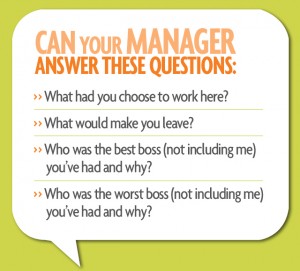
Then ask the Candor Questions
during job interviews, one-on-one, and team meetings. We’re always
learning how to work with people. So continue asking questions
throughout your relationships. These conversations are not one-time
events.
If you work for someone who isn’t asking you these questions, offer the information. You could say:
If the language above makes you uncomfortable, you can always blame me. You could say:
Managers:
The fear of saying what we think and asking for what we want
at work is prevalent across organizations. We want more money, but don’t
know how to ask for it. We want to advance our careers but are
concerned about the impression we’ll make if we ask for more. Instead of
making requests, many employees assume they won’t get their needs met
and choose to leave their jobs, either physically or emotionally.
- Do you know why your employees chose your organization and what would make them leave?
- Do you know your employees’ best and worst boss?
It’s easy to mistake my book, How to Say Anything to Anyone, as a book about giving feedback. It’s not. It takes me nine chapters to get to feedback. The first eight chapters of the book are about how to create relationships in which you can tell the truth without fear. You can read all the feedback books you want and take numerous training classes on coaching, managing people, giving feedback, and managing conflict, and you’ll still be hesitant to speak up, because a formula for giving feedback is not what you’re missing. What’s missing is being given permission and knowing it’s safe to tell the truth.
Managers, tell your employees:
“I appreciate you choosing to work here. I want this to be the best career move you’ve made, and I want to be the best boss you’ve had. I don’t want to have to guess what’s important to you. I’d like to ask you some questions to get to know you and your career goals better. Please tell me anything you’re comfortable saying. And if you’re not comfortable answering a question, just know that I’m interested and I care. And if, at any point, you’re comfortable telling me, I’d like to know.”
If you work for someone who isn’t asking you these questions, offer the information. You could say:
“I wanted to tell you why I chose this organization and job, and what keeps me here. I also want to tell you the things I really need to be happy and do my best work. Is it ok if I share?”Your manager will be caught off guard, but it is likely that she will also be grateful. It’s much easier to manage people when you know what they need and why. Most managers want this information, it just may not occur to them to ask.
If the language above makes you uncomfortable, you can always blame me. You could say:
“I read this blog and the author suggested I tell you what brought me to this organization and what I really need to be happy here and do my best work. She said I’d be easier to manage if you had that information. Is it ok if I share?”Yes, this might feel a little awkward at first, but the conversation will flow, and both you and your manager will learn a great deal about each other. The ability to tell the truth starts with asking questions, giving people permission to speak candidly, and listening to the answers.
Wednesday, April 2, 2014
#GoBuffsPro: How Becoming a Buffs Professional Can Benefit You
Stand out with the Buffs Professional Program certificate! These
four workshops offered by Career Services are designed to prepare you for the
professional work world. Learn what it
takes to transition into the professional world after college.
April is your last chance this semester to earn your Buffs
Professional Program certificate! Simply attend the four workshops (or
participate in them online) and attend the career fair. Once you've completed
the required workshops and attended the career fair, you'll be invited to
attend the Summit event on April 24th. You do not have to complete the classes
in any particular order. Below are the in-person workshops.
Explore Majors and
Careers
Tuesday, April 8th,
5:30-6:30pm, S350
Learn about majors you're interested in and career
assessments. This workshop will allow you to connect your strengths and skills
to areas of interest.
Resumes &
Networking
Tuesday, April 15th,
5:30-6:30pm, S350
It has been said that 80% of jobs are found through
networking. Often times it’s about whom you know and getting your foot in the
door. During this class you can craft a
resume from scratch or work on your existing resume.
Internship/Job Search
& Interviewing
Tuesday, April 22nd,
5:30-6:30pm, S350
Begin the internship and job search process and learn the
ins and outs of how to be successful in your search. This class emphasizes
building social media job searching skills and interviewing skills to put you
ahead of the competition.
Professionalism
Skills
Tuesday, April 29th,
5:30-6:30pm, S350
Gain insight into professionalism on the job and skills to
adapt to changing work environments. Learn the professional skills that
employers seek in candidates.
This is a unique opportunity to make your application stand
out and understand what employers are looking for in candidates. Click here to
see the student requirements.
To get started, email: BuffsPro@Colorado.edu
with your student ID number. The Buffs Professional Program is managed through
Desire2Learn, so you can attend workshops in person or online.
Monday, March 31, 2014
Justin Gold | Owner & Founder of Justin’s
Written by Amanda Barrell with Bolder Young Professionals
Peanut butter and chocolate is probably the ultimate match made in heaven. The only way the combo could get any better would be to put it in a spread, or a handy to-go pack that won’t get smushed out of shape in a pocket or backpack. Justin Gold, Boulder entrepreneur and owner of Justin’s, has done just that, with his variety of nut butters (in convenient squeeze packs) and candies. Paired with a commitment to using all-natural, organic, GMO-free ingredients, Gold has found overwhelming success in his business producing the nut butters and peanut butter cups, particularly given his unconventional background.

“I grew up in a small rural town in Western Pennsylvania with dreams of becoming an environmental lawyer until I interned at a law firm in college and, well, changed my mind.”
Gold’s grandfather started one of the first “health food” stores in western Pennsylvania in the 1960’s, and Gold credits him for giving him an early introduction to natural products. In college, Gold worked towards earning a degree in environmental studies, helping to organize field trips to hazardous waste facilities, landfills, meat packing plants and dairy farms. These factors, coupled with his vegetarian lifestyle and his upbringing, helped to solidify Gold’s dedication to sustainability and using organic and natural products for what would become Justin’s.
“Imagine telling your parents that you are giving up a law degree for the opportunity to make peanut butter… They were totally supportive and that has made all the difference.”
Gold moved to Boulder shortly after finishing college where he worked as a waiter and at an outdoor store for several years until his company was stable enough to launch.
The inspiration for Justin’s was born from Gold’s vegetarian lifestyle and eating lots of peanut and almond butter during his many outdoor adventures. Originally starting with jars sold at farmers markets, it was Gold’s squeeze pack that really helped launch his company nationally.
“I was on a long mountain bike and was sick of my bars and gels and just wanted a packet of peanut or almond butter. The squeeze pack innovation instantly put our company on the map with national distribution in Whole Foods Market and Starbucks.”

Today, 11 years after Justin’s was founded, the nut butters are sold nationwide in a variety of flavors and styles, from classic peanut butter to chocolate hazelnut butter and maple almond butter (Gold’s favorite). It was a natural progression then, to break into producing organic peanut butter cups. Gold capitalized on the classic combo of chocolate and peanut butter, much like the ever famous Reese’s, but with an all-natural, organic spin to them in both milk and dark chocolate peanut butter cups.
As any business owner will tell you, Gold is simultaneously challenged and rewarded by the things that come each day, pulling him in a hundred different directions all at once. His day-to-day work is rarely ever the same, but he tries to keep things consistent, as best he can.
“My day always starts with a workout then getting to the office first so I can rock out to music while I catch up on emails. The rest of the day blows by with meetings, projects, etc.”
Gold strives to stay true to Justin’s mission, using quality, organic and all-natural ingredients that come together in delicious, vegan, gluten- and GMO-free products.
Looking to the future, Gold hopes to continue to meet the growing demand from his increasing fan base, keeping them stocked with delicious Justin’s products.
“It sounds crazy, but my big milestone is to have us in a position where we have plenty of inventories to sell to our customer who are constantly out of stock. We’ve never had the opportunity to catch up with customer demand.”
As for his participation with the Boulder community and Bolder Young Professionals, Gold encourages all budding entrepreneurs and young professionals to follow their passions and start somewhere.
“Our economic future lies within the courage and curiosity of the young minds. I’m thrilled to be involved with organizations that support and encourage intellectual curiosity at young ages”.
Peanut butter and chocolate is probably the ultimate match made in heaven. The only way the combo could get any better would be to put it in a spread, or a handy to-go pack that won’t get smushed out of shape in a pocket or backpack. Justin Gold, Boulder entrepreneur and owner of Justin’s, has done just that, with his variety of nut butters (in convenient squeeze packs) and candies. Paired with a commitment to using all-natural, organic, GMO-free ingredients, Gold has found overwhelming success in his business producing the nut butters and peanut butter cups, particularly given his unconventional background.
“I grew up in a small rural town in Western Pennsylvania with dreams of becoming an environmental lawyer until I interned at a law firm in college and, well, changed my mind.”
Gold’s grandfather started one of the first “health food” stores in western Pennsylvania in the 1960’s, and Gold credits him for giving him an early introduction to natural products. In college, Gold worked towards earning a degree in environmental studies, helping to organize field trips to hazardous waste facilities, landfills, meat packing plants and dairy farms. These factors, coupled with his vegetarian lifestyle and his upbringing, helped to solidify Gold’s dedication to sustainability and using organic and natural products for what would become Justin’s.
“Imagine telling your parents that you are giving up a law degree for the opportunity to make peanut butter… They were totally supportive and that has made all the difference.”
Gold moved to Boulder shortly after finishing college where he worked as a waiter and at an outdoor store for several years until his company was stable enough to launch.
The inspiration for Justin’s was born from Gold’s vegetarian lifestyle and eating lots of peanut and almond butter during his many outdoor adventures. Originally starting with jars sold at farmers markets, it was Gold’s squeeze pack that really helped launch his company nationally.
“I was on a long mountain bike and was sick of my bars and gels and just wanted a packet of peanut or almond butter. The squeeze pack innovation instantly put our company on the map with national distribution in Whole Foods Market and Starbucks.”
Today, 11 years after Justin’s was founded, the nut butters are sold nationwide in a variety of flavors and styles, from classic peanut butter to chocolate hazelnut butter and maple almond butter (Gold’s favorite). It was a natural progression then, to break into producing organic peanut butter cups. Gold capitalized on the classic combo of chocolate and peanut butter, much like the ever famous Reese’s, but with an all-natural, organic spin to them in both milk and dark chocolate peanut butter cups.
As any business owner will tell you, Gold is simultaneously challenged and rewarded by the things that come each day, pulling him in a hundred different directions all at once. His day-to-day work is rarely ever the same, but he tries to keep things consistent, as best he can.
“My day always starts with a workout then getting to the office first so I can rock out to music while I catch up on emails. The rest of the day blows by with meetings, projects, etc.”
Gold strives to stay true to Justin’s mission, using quality, organic and all-natural ingredients that come together in delicious, vegan, gluten- and GMO-free products.
Looking to the future, Gold hopes to continue to meet the growing demand from his increasing fan base, keeping them stocked with delicious Justin’s products.
“It sounds crazy, but my big milestone is to have us in a position where we have plenty of inventories to sell to our customer who are constantly out of stock. We’ve never had the opportunity to catch up with customer demand.”
As for his participation with the Boulder community and Bolder Young Professionals, Gold encourages all budding entrepreneurs and young professionals to follow their passions and start somewhere.
“Our economic future lies within the courage and curiosity of the young minds. I’m thrilled to be involved with organizations that support and encourage intellectual curiosity at young ages”.
Subscribe to:
Posts (Atom)